
Micro Market Costs Explained: Are They Worth It for Businesses?
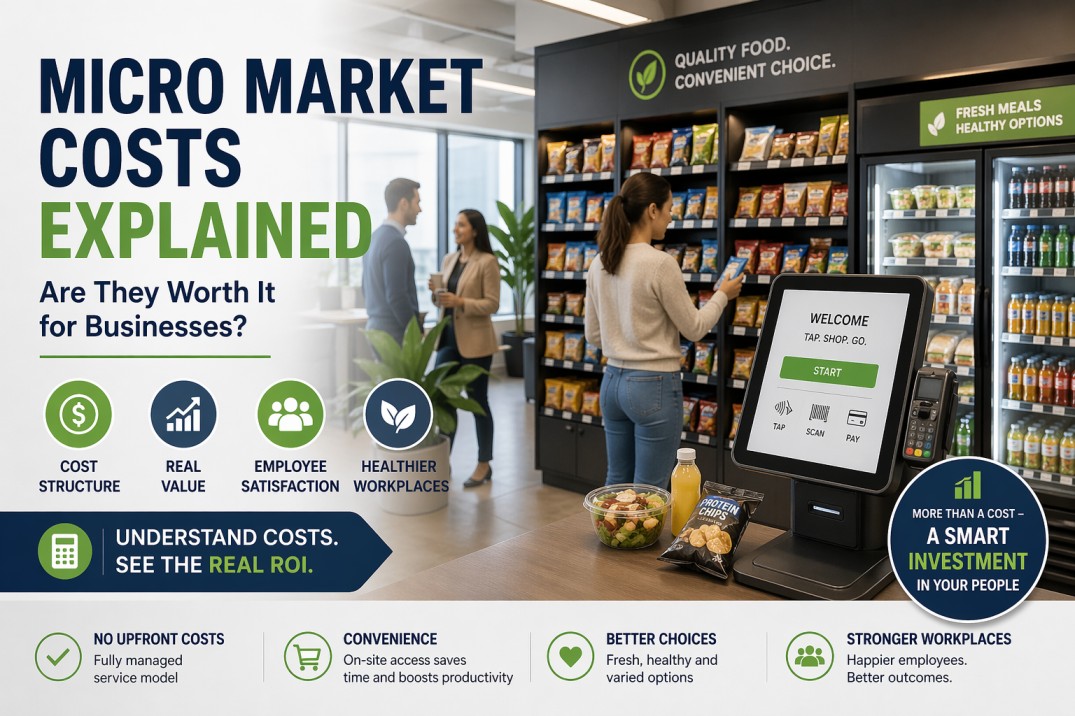
When businesses consider upgrading their workplace food options, one of the first questions that comes up is simple:how much does a micro market cost?
It’s a fair question especially when micro markets look more advanced than traditional vending machines. With open shelving, smart kiosks, fresh food fridges and cashless payment systems, they can appear like a significant investment at first glance.
In reality, the cost structure is very different from what most businesses expect.
Understanding how pricing works and what value a micro market actually delivers is key to deciding whether it’s the right fit for your workplace.
Do Micro Markets Cost Anything to Install?
In most cases, a fully managed micro market can be installed with no upfront cost to your business, making it an accessible option for workplaces looking to upgrade their food and beverage offering without capital investment. This typically includes:
Equipment and Setup
Refrigeration units and shelving are provided as part of the setup and are tailored to suit the available space and workforce size. Self-checkout kiosks are also included, enabling fast, cashless transactions without the need for on-site staff to manage purchases.
Installation and Support
The delivery and installation process is fully managed by the provider, ensuring minimal disruption to daily workplace operations. Once installed, ongoing maintenance is handled externally so the system continues to operate smoothly without burdening internal teams.
Daily Operations
The delivery and installation process is fully managed by the provider, ensuring minimal disruption to daily workplace operations. Once installed, ongoing maintenance is handled externally so the system continues to operate smoothly without burdening internal teams.
If you’re new to the concept, it helps to understand how micro markets work in the workplace, including day-to-day usage and setup expectations.
How Micro Market Pricing Actually Works
Micro markets are typically offered as a fully managed service rather than a product businesses purchase outright, which shifts the focus from ownership to ongoing workplace convenience and service delivery. This structure is designed to simplify setup while removing traditional capital costs.
Service-Based Model
There are no leasing or ownership costs, meaning businesses don’t need to invest in equipment or infrastructure. Instead, the provider fully manages day-to-day operations, including stock control, maintenance, and ongoing system performance.
Revenue Through Usage
Employees purchase items directly in a retail-style environment using cashless or self-checkout systems. The model is sustained through consistent workplace demand rather than fixed service fees or upfront payments.
This approach removes the barrier of upfront investment while still delivering a fully operational, high-quality workplace food solution.
Are There Any Hidden Costs?
In a standard setup, there are generally no hidden service fees for businesses. However, the viability of a micro market depends on a few key operational factors that are typically assessed before installation to ensure long-term performance and sustainability.
Workplace Size
Employee numbers play a major role, as larger teams tend to generate more consistent and predictable demand. Higher usage generally leads to better performance, ensuring the market remains well-stocked and aligned with workplace needs.
Daily Foot Traffic
Regular daily activity is essential, particularly during peak break periods when demand is highest. Shift-based workplaces often perform especially well due to structured usage patterns throughout the day.
Layout and Accessibility
Easy-to-access locations encourage higher engagement and repeat usage from employees. Well-positioned setups within communal or high-traffic areas typically achieve stronger overall performance.
These factors are typically reviewed during the planning stage to ensure the solution is suitable for the workplace. Choosing the right setup and provider is a key part of this process, which is why many businesses evaluate the right micro market partner before proceeding.
What Determines the Value of a Micro Market?
While the upfront cost may be minimal, thereal value of a micro market comes from how effectively it’s used within your workplace.
Product Range and Quality
A strong product range is one of the most important factors in driving consistent engagement within a micro market. Offeringfresh meals and healthier options helps encourage better eating habits and supports overall employee wellbeing throughout the workday.
At the same time, avaried selection of snacks and drinks ensures there is something available for different preferences and consumption habits. This variety helps maintain ongoing interest and keeps employees returning to the micro market over time.
A well-curated selection plays a major role in adoption. This is closely tied to how micro markets improve employee wellbeing and nutrition, particularly in modern workplaces.
Technology and User Experience
Fast, self-service checkout systems are a core part of the modern micro market experience, helping to reduce queues and minimise friction during busy break times. This creates a smoother flow of transactions and ensures employees can access food and drinks quickly without disruption.
Cashless payment options further enhance convenience by aligning with current workplace expectations, where speed and simplicity are prioritised. Reliable, well-integrated systems are essential for building trust and ensuring consistent performance, particularly in high-traffic environments. This is where micro market technology in Sydney and Melbourne offices becomes a key differentiator.
Restocking and Maintenance
Consistent product availability is essential for maintaining strong engagement, as it prevents frustration and reduces the likelihood of employees abandoning the micro market experience. When shelves are reliably stocked, usage remains steady and predictable over time.
A clean, well-organised presentation also plays a key role in shaping perception, as it reinforces the idea of a professional and well-managed workplace amenity. A fully managed setup ensures these are handled properly, which is why understanding how micro market restocking and maintenance works is important for businesses considering long-term performance.
Workplace Environment
Different workplace environments influence how a micro market performs, making it important to tailor the setup to the specific site. Offices typically experience steady and predictable usage throughout the day, with employees accessing the market during standard break times.
Warehouses and industrial sites, on the other hand, often see concentrated spikes in demand during scheduled breaks or shift changes, requiring more efficient restocking and product planning. Mixed-use workplaces may require a more flexible approach, as usage patterns can vary significantly depending on staff structure and daily operations.
Each environment ultimately shapes how the micro market performs and evolves over time, influencing product selection, layout, and overall engagement.
Micro Markets vs Traditional Vending: Cost Perspective
At first glance, vending machines may seem like the more economical option due to their simpler setup and smaller footprint. However, when comparing long-term value and workplace impact, the differences extend well beyond initial installation costs.
Micro Markets Offer
Micro markets providegreater product variety, including fresh meals, healthier options, and premium food choices that better reflect modern workplace expectations. This broader selection helps improve employee satisfaction and supports more consistent usage throughout the day.
They also deliver abetter user experience through open access layouts and self-service browsing, allowing employees to choose products more freely. Combined with this, they typically achievehigher engagement levels, as the wider range of products encourages repeat visits and ongoing adoption.
Traditional Vending Machines
Traditional vending machines are generally limited to a narrower range of packaged snacks and drinks, which can restrict employee choice and reduce long-term engagement. Their fixed structure also makes themless flexible, making it difficult to adapt quickly to changing workplace preferences or dietary trends.
As a result, usage can plateau over time, particularly in workplaces where employees expect more variety and fresher options.
If you’re weighing both options, understanding micro markets vs traditional vending machines can help clarify which suits your business better.
Are Micro Markets Worth It for Businesses?
The value of a micro market isn’t measured purely in financial terms — it is best understood through its impact on workplace experience and employee satisfaction.
Key Benefits
- Improved employee satisfaction comes from convenient access to food without needing to leave the workplace.
- Time savings are achieved by reducing the need for off-site trips during break times.
- Better food accessibility is provided, particularly in locations where nearby options are limited or inconvenient.
- Stronger workplace culture is supported through shared amenities that encourage interaction and connection among employees.
These benefits collectively contribute to improved productivity, higher retention, and a better overall workplace environment.
Choosing the Right Micro Market Provider
Even with a favourable cost structure, the provider you choose plays a critical role in long-term performance and overall success.
What to Look For
- Consistent product quality ensures employees remain engaged and satisfied with the available range over time.
- Reliable service and restocking help prevent downtime and ensure products are always available when needed.
- Modern, user-friendly technology improves ease of use and makes transactions faster and more seamless.
- Responsiveness to feedback allows the micro market to evolve based on real usage patterns and workplace needs.
These factors directly influence the success of the system, affecting both employee experience and operational performance. If you’re evaluating options, it’s worth understanding how to choose the right micro market partner for your Sydney or Melbourne workplace.
Micro Markets in Sydney and Melbourne Workplaces
Micro markets are becoming increasingly common across major Australian cities, particularly in high-density business environments where employees value convenience, flexibility, and on-site food access throughout the day.
Sydney Workplaces
Sydney workplaces are experiencing high demand for convenient, on-site food solutions that reduce the need for employees to leave the office during busy work schedules. This is especially relevant in locations where long commute times make quick, accessible food options within the workplace more important.
Explore how micro markets in Sydney are being implemented across different workplaces.
Melbourne Workplaces
Melbourne workplaces are seeing growing adoption of micro markets across both corporate offices and industrial environments, driven by increasing demand for convenient and modern on-site food solutions. This growth reflects a shift toward more flexible workplace amenities that better support employee needs throughout the day.
Micro markets in Melbourne are particularly well-suited to a wide range of environments due to their adaptable layouts and scalable setups, making them suitable for both smaller teams and large multi-shift operations. Learn more about how micro markets in Melbourne are supporting modern workplaces.
What If You Were to Build One Yourself?
While most businesses opt for a fully managed solution, setting up a micro market independently requires careful planning and a significant investment in both equipment and ongoing operations.
Equipment Requirements
Refrigeration units are needed to safely store fresh food and maintain product quality throughout the day. Shelving and display systems must also be installed to ensure products are clearly organised and easily accessible for employees. Self-checkout kiosks and payment integration systems are required to enable smooth, cashless transactions within the workplace.
Operational Complexity
Managing stock and inventory becomes an ongoing responsibility, requiring regular monitoring to ensure products remain available and well-balanced. Maintenance and servicing must also be handled internally to keep all equipment functioning properly. In addition, usage patterns need to be tracked and analysed to maintain efficiency and meet employee demand.
This quickly becomes resource-intensive, which is why fully managed solutions are often preferred. If you’re exploring this route, understanding where to find micro market equipment is a useful starting point.
The Real ROI of a Micro Market
The return on investment for a micro market is best understood in terms of workplace efficiency and overall employee experience rather than direct financial return alone.
Operational Benefits
Streamlined break times are achieved through faster access to food and drinks, reducing delays during peak periods.
Reduced workplace disruption occurs as employees spend less time leaving the site to purchase meals or snacks externally.
Employee Experience
Greater convenience is delivered by providing food and beverages on-site at all times, improving day-to-day accessibility.
Healthier choices are encouraged through better product variety, supporting more balanced eating habits throughout the workday.
Over time, these advantages contribute to a more engaged, satisfied, and productive workforce, strengthening both workplace culture and operational efficiency.
Why Micro Markets Deliver Real Workplace ROI (Beyond Just Cost Savings)
Micro markets may appear like a premium solution, but their cost structure makes them far more accessible than many businesses expect.
With no upfront investment in most cases and a fully managed setup, they offer a practical way to upgrade workplace amenities without financial risk.
If you’re considering a micro market for your workplace, the best next step is to explore what a tailored setup could look like for your site. You can get started or speak with the Qualityvend team to learn more about how we support workplaces across Australia.