
How Autonomous Vending Robots Work in Australian Venues
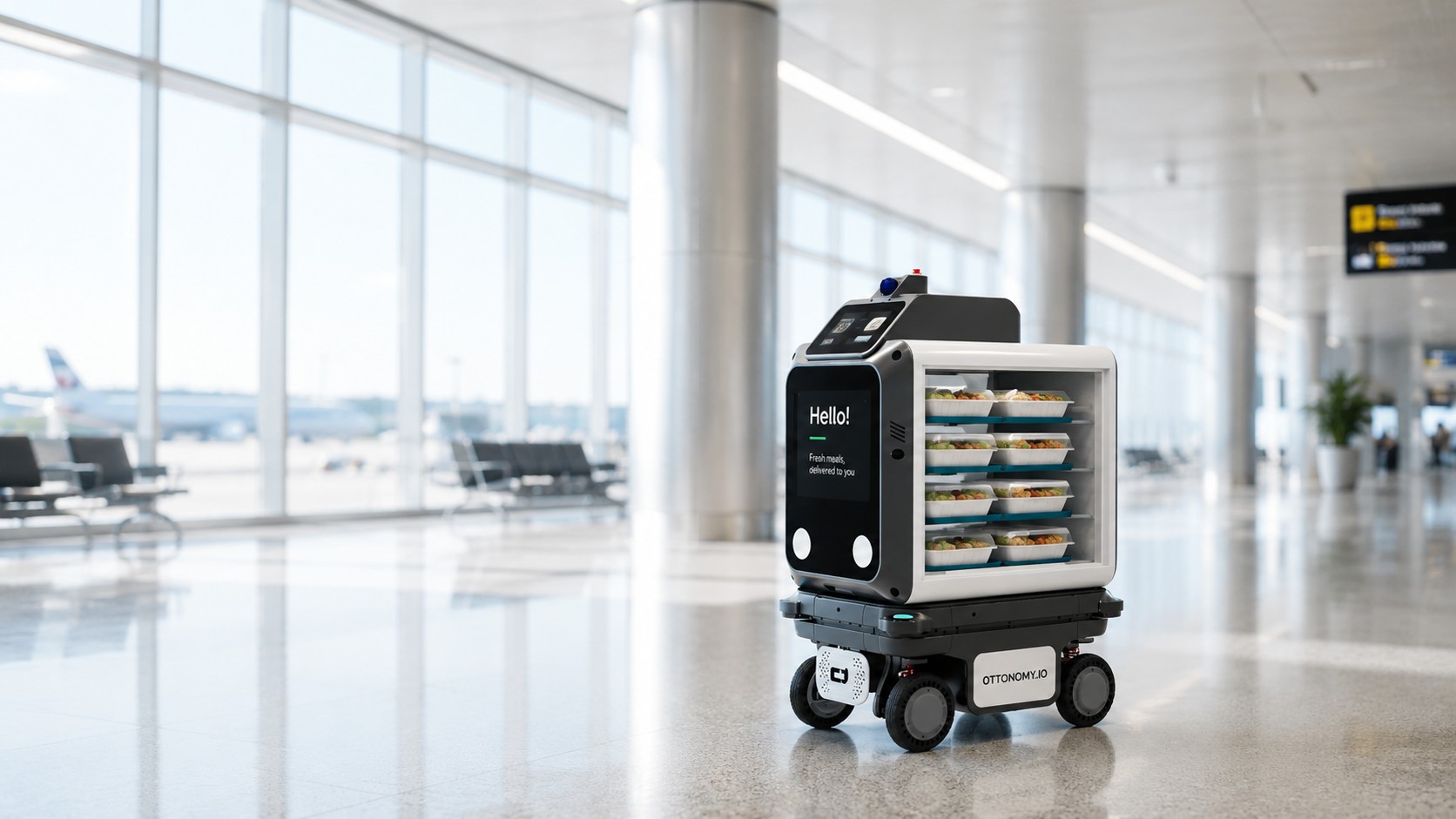
Large venues have a distance problem. In an airport terminal, a hospital campus or a university precinct, the nearest café or vending machine can be a long walk from where people actually wait, work or study. For a passenger settled at a gate or a nurse partway through a shift, that walk is often the reason they go without.
Autonomous vending robots are designed to close that gap. Instead of waiting in one fixed spot for customers to find them, they bring food, drinks and everyday essentials to the areas where people already are.
This guide explains how the technology works in practice: how a robot moves through a venue, how customers buy from it, and what happens behind the scenes to keep it stocked, charged and running reliably.
What is autonomous vending?
Autonomous vending is a self-service retail format in which a mobile robot carries food, drinks and essentials through approved areas of a venue. Customers browse products on a touchscreen, pay by card or phone, and collect their item from a secure compartment, while stock levels, location and operating status are monitored remotely.
You may also see the format described as vending robots, mobile vending machines or autonomous retail robots. The terms differ, but the idea is the same: retail that moves to the customer rather than the other way around.
It sits alongside other unattended retail formats, such as traditional vending machines, AI smart fridges and micro markets. The difference is mobility. A fixed machine serves the people who walk past it, while a robot can serve several parts of a venue over the course of a day.
How a vending robot moves through a venue
Mapped areas and approved routes
Before a robot starts operating, the area it will work in is mapped. The venue and the operator agree which corridors, concourses, lobbies and waiting areas the robot can enter, and which areas are off limits, such as clinical spaces, back-of-house zones or emergency exits.
The robot then follows set routes or moves between designated stopping points according to a schedule. In practice, that might mean spending the morning near a cluster of departure gates and the afternoon near a staff break area, depending on where demand sits at different times of day.
Detecting people and obstacles
Shared pedestrian spaces are busy and unpredictable. Autonomous vending robots use onboard navigation and sensor systems to detect people, trolleys, furniture and other obstacles along their route, slowing, stopping or adjusting their path as needed.
Because every venue is different, route suitability and safety requirements are assessed before deployment rather than assumed. Busy pinch points, temporary displays and narrow doorways are all factors that shape where and when the robot operates.
Lifts, doors and multi-level sites
Single-level operation is the simplest arrangement. Some robot configurations can work with lifts or automatic doors, but this depends on the robot model, the building's systems and the technical requirements of integrating the two.
Where a venue spans several levels, multi-level operation is assessed as part of the deployment process. In some cases, it is more practical to run a robot on one busy level and serve other levels with fixed formats.
How customers buy from a vending robot
Browsing on the touchscreen
When the robot stops, customers use an interactive touchscreen to see what is available. The experience is similar to browsing a self-service kiosk: products are displayed with names and prices, and customers select what they want.
The product range depends on how the robot is configured. Refrigerated compartments allow for fresh meals, salads, sandwiches, wraps and cold drinks, while ambient storage suits snacks and everyday items. Some venues add travel essentials or personal care products to suit their customers.
Cashless payment and secure dispensing
Payment is cashless and contactless. Customers tap a card, phone or wearable, and once the payment is approved, the robot releases the selected product from a secure compartment.
There is no staffed checkout and no cash handling. Each transaction is recorded automatically, which keeps the process quick for customers and gives the operator accurate sales data.
What happens behind the scenes
Remote monitoring of stock, location and status
While the robot is operating, its stock levels, sales activity, location and operating status can be monitored through a remote management platform. Low-stock notifications help the service team plan replenishment before popular products run out.
Remote monitoring also helps identify operating issues early. If the robot stops unexpectedly or a compartment needs attention, the service team can respond without waiting for someone at the venue to report it.
Charging, restocking and cleaning
A vending robot still needs regular care. It returns to a designated base to charge, and restocking takes place in a secure area agreed with the venue, ideally close to storage or a loading dock. Touchscreens and compartments are cleaned as part of routine servicing.
The service arrangement determines who carries out these tasks. In a fully managed model, the vending operator handles restocking, maintenance coordination and support, so the venue's facilities team is not taking on extra work.
Using sales data to refine the range
Every sale adds to a picture of what customers buy, where and when. That data makes it possible to refine the range over time: increasing popular products, replacing slow sellers and adjusting stock for different routes or times of day.
This is one of the main advantages of a connected format. Rather than restocking the same mix every visit, the range improves as the operator learns how the venue actually uses the robot.
Autonomous vending vs fixed vending machines
| Factor | Autonomous vending robot | Fixed vending machine |
| Location | Moves between approved areas | Stays in one position |
| Best suited to | Large venues with customers spread across many areas | Sites where foot traffic concentrates in one place |
| Customer effort | Products come to the customer | Customer travels to the machine |
| Site requirements | Clear routes, reliable connectivity, charging and restocking space | Floor space and a power outlet |
| Product range | Depends on refrigeration and compartment configuration | Snacks, drinks and, in some models, meals |
Neither format is better in every situation. Where a workplace has one busy break room, a fixed machine or one of the AI smart fridges that stay in a single location is usually the simpler choice. Where demand is high and people want a wider range, a self-service micro market may suit better. Autonomous vending earns its place where customers are spread out and the distance to food is the real barrier.
What autonomous vending means for venue operators
For the venues where it fits, autonomous vending offers several practical benefits:
- Wider coverage: one robot can serve several areas that would otherwise each need their own fixed outlet.
- Extended availability: food and drinks remain accessible outside café trading hours, which matters for overnight and early-morning operations.
- Less customer travel: people can buy what they need without leaving a gate, ward or study space.
- Lower day-to-day workload: under a managed service, stocking, monitoring and maintenance sit with the operator.
- Branding opportunities: exterior wraps and screen content can carry venue messaging or sponsored promotions, depending on the robot and agreement.
These benefits are most visible in settings like healthcare, where staff and visitors are often far from food during long shifts. Our overview of vending and micro market options for Australian hospitals covers that environment in more detail. Campuses face a similar challenge across large, spread-out grounds, as outlined in our guide to vending and micro markets for universities.
Frequently asked questions
Is autonomous vending safe around people?
Autonomous vending robots use navigation and sensor systems designed to detect people and obstacles and adjust their movement accordingly. Each venue is assessed before deployment to confirm suitable routes, operating areas and any site-specific safety requirements.
Does a vending robot need staff?
The robot sells products without a staff member processing each transaction. It still needs restocking, cleaning, charging, monitoring and technical support, which are handled by the service team under a fully managed arrangement.
How is charging managed?
The robot returns to a designated charging base within the venue. The location of that base, and the timing of charging, are planned during setup so the robot is available when demand is highest.
Can the robot be branded?
Branding options can include exterior wraps, on-screen content, venue messaging and sponsored promotions. What is available depends on the robot model and the deployment agreement.
Is autonomous vending available outside Sydney and Melbourne?
Availability depends on the venue's location, deployment requirements and servicing arrangements. Qualityvend's teams are based in Sydney and Melbourne, with support crews in other major cities, so suitability is confirmed site by site.
Bringing autonomous vending to your venue
Autonomous vending is a practical answer to a specific problem: customers who are too far from food and drinks to reach them conveniently. When the venue layout, routes and demand line up, a robot can extend access across areas that fixed outlets cannot reach.
The first step is understanding whether your venue suits the format. You can learn more about Qualityvend's fully managed autonomous vending service, including how the team assesses sites and recommends the right mix of vending formats.