
Where Autonomous Vending Works Best: Airports, Hospitals, Campuses and Beyond
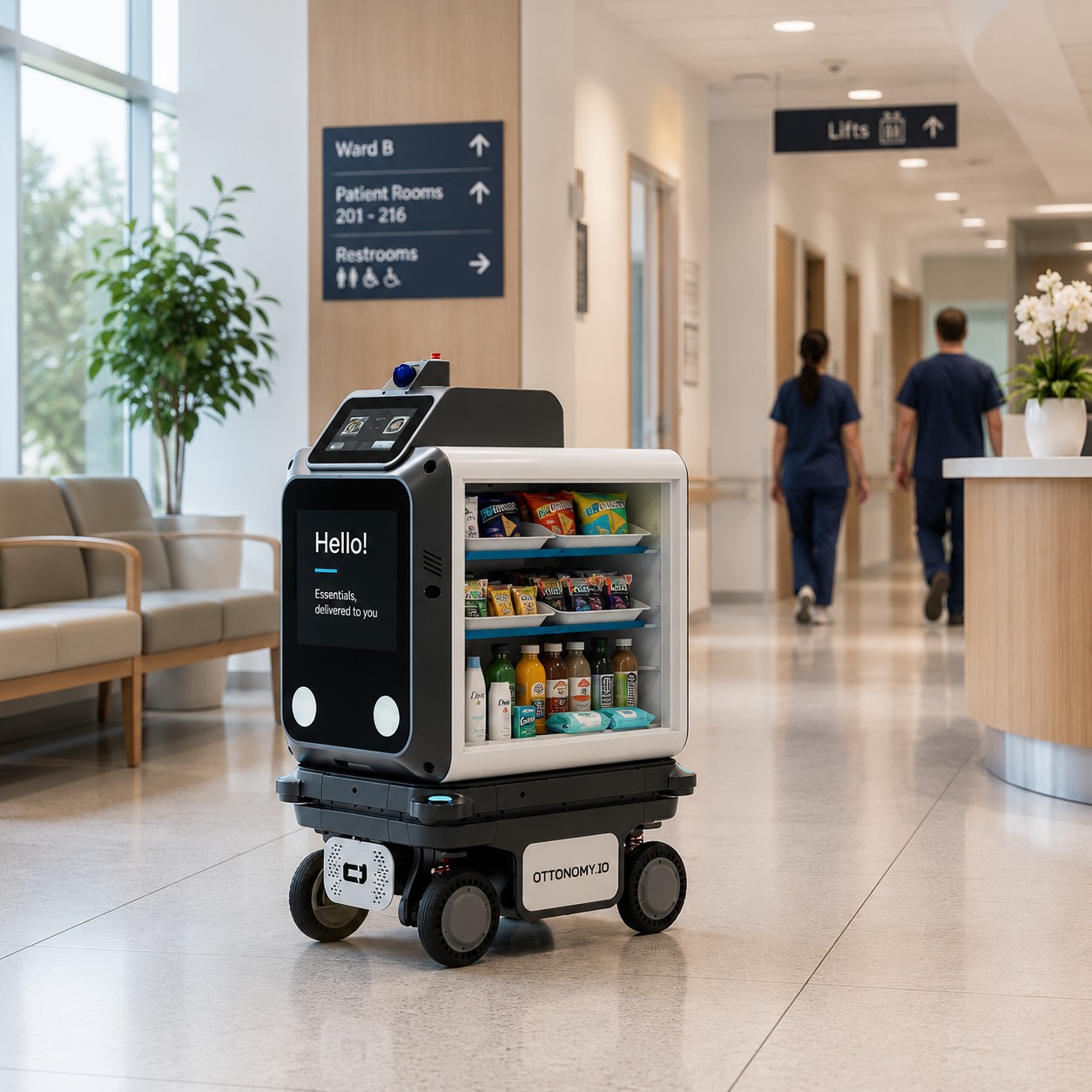
Autonomous vending robots tend to attract attention for their technology. For a venue operator, though, the more useful question is a practical one: where does a mobile vending robot genuinely improve access to food and drinks, and where would a fixed machine do the job just as well?
The answer comes down to layout and how people move through a space. This article looks at the venue types where autonomous vending usually adds the most value, and is clear about the situations where another format makes more sense. If you are new to the technology, our guide to how vending robots navigate, sell and stay stocked covers the fundamentals.
What makes a venue a good fit
Venues that suit autonomous vending usually share a few characteristics:
- Customers are spread across a large area rather than gathered in one place.
- There is a long walk between where people wait or work and the nearest food outlet.
- Demand shifts between different areas through the day.
- Food access drops away after hours or outside café trading times.
- Indoor routes are wide and clear enough for a robot to share with pedestrians.
The more of these that apply, the stronger the case. If a venue meets only one or two, a well-placed fixed format is often the better investment.
Airports and transport hubs
Reaching customers at gates and waiting areas
Once passengers are through security and seated near their gate, many are reluctant to leave in case boarding is called or their seat is taken. Food outlets are often clustered in central areas, which leaves outer gates and transit lounges with limited options.
A vending robot can move between gate lounges, arrivals halls and waiting areas, following demand as flight schedules change through the day. The same principle applies to large rail and bus interchanges, where waiting areas are spread along platforms and concourses.
Travel essentials alongside food and drinks
Travellers often need more than a snack. Depending on the robot's configuration, the range can include items such as phone chargers, headphones and personal care products alongside meals and drinks. The mix can be adjusted for each route based on what passengers in that area actually buy.
Hospitals and healthcare campuses
Wards, waiting rooms and staff areas
Hospitals are large, complex buildings where people spend long periods in one place. Families wait for news, outpatients wait for appointments, and staff on busy wards often cannot step away long enough to walk to a café.
An autonomous vending robot can operate in approved non-clinical areas such as waiting rooms, main corridors and staff break spaces. Clinical areas are typically excluded from routes, and operating zones are agreed with hospital management during planning. Our overview of vending and micro market options for Australian hospitals explains how mobile and fixed formats can work together in healthcare settings.
Supporting night shifts
Hospital cafés usually close in the evening, but care continues around the clock. Night-shift staff are among the people most affected by limited food access. Where approved, a robot can serve staff areas overnight, bringing meals and drinks closer to the people who need them most.
Universities and large campuses
University campuses can stretch across many buildings, with libraries, labs and study spaces some distance from the nearest food outlet. Demand is uneven: it rises around lecture changeovers, evening classes and exam periods, when students spend long hours in libraries and study halls.
A mobile robot can follow those patterns, spending time near study areas during exams and moving to busier zones between classes. For the wider picture of food access on campus, see our guide to campus vending and micro markets for universities.
Shopping centres, stadiums and event venues
In shopping centres, a robot can serve parts of the centre that sit away from food courts, such as large-format retail zones or car park lobbies. At stadiums and event venues, it can help spread demand across concourses at busy times, giving customers another option besides the main kiosks.
These venues need careful route planning. Crowds build quickly at events, so operating areas and times are set to keep the robot out of the most congested points.
Branding and advertising opportunities
A mobile robot is a visible presence in a busy venue. Branding options can include exterior wraps, on-screen content, venue messaging and sponsored promotions, which gives operators a potential advertising channel as well as a retail one. What is available depends on the robot model and the deployment agreement.
Large workplaces and mining villages
Corporate campuses with several buildings face a similar challenge to universities: one staff café cannot conveniently serve everyone. A robot can rotate between buildings, meeting rooms and break areas through the day.
Mining accommodation villages and large industrial sites bring a different set of needs. Shift workers come and go at all hours, and common areas may be some distance from the main dining facilities. Our guide to food options for industrial and warehouse sites covers the fixed formats that often anchor these sites. For remote locations, servicing arrangements need to be confirmed as part of planning, as restocking and support depend on where the site is.
When a fixed vending format is the better choice
Autonomous vending is not the right answer for every site. A fixed format is usually more practical when:
- Most people pass through a single break room, lobby or canteen, where a vending machine or AI smart fridge can serve them directly.
- Demand is high and people want a wide range of fresh food, which a micro market handles better.
- Routes are narrow, crowded, stepped or interrupted by doors that cannot be automated.
- Connectivity is unreliable across the areas the robot would need to cover.
Many venues end up with a combination: fixed formats in the busiest hubs and a robot covering the gaps between them. Working through a site readiness checklist for autonomous vending is a useful way to test which approach suits your venue.
Frequently asked questions
Which venues benefit most from autonomous vending?
Large venues with customers spread across many areas, such as airports, hospitals, universities, shopping centres and multi-building workplaces, tend to benefit most, particularly where food outlets are far from where people spend their time.
Can one robot serve several areas of a venue?
Yes. A robot can follow a route or move between designated stopping points on a schedule, which allows it to serve different areas at different times of day.
Can autonomous vending work alongside existing cafés and vending machines?
Yes. A robot is often used to fill gaps rather than replace existing outlets, reaching areas and times that cafés and fixed machines do not cover.
What if our venue is not a good fit?
A site assessment will show whether a robot suits your venue. If it does not, a vending machine, AI smart fridge or micro market may provide better access to food for your customers or staff.
Finding the right fit for your venue
Autonomous vending works best where distance is the main barrier between people and food. Airports, hospitals, campuses and large workplaces often fit that description, but the details of each venue decide whether a robot, a fixed format or a combination is the right choice.
To explore whether a mobile robot suits your site, see how Qualityvend's fully managed autonomous vending service approaches venue assessment and deployment.